Insight
A history of disruption
Words by Luke Taylor
19 March 2025
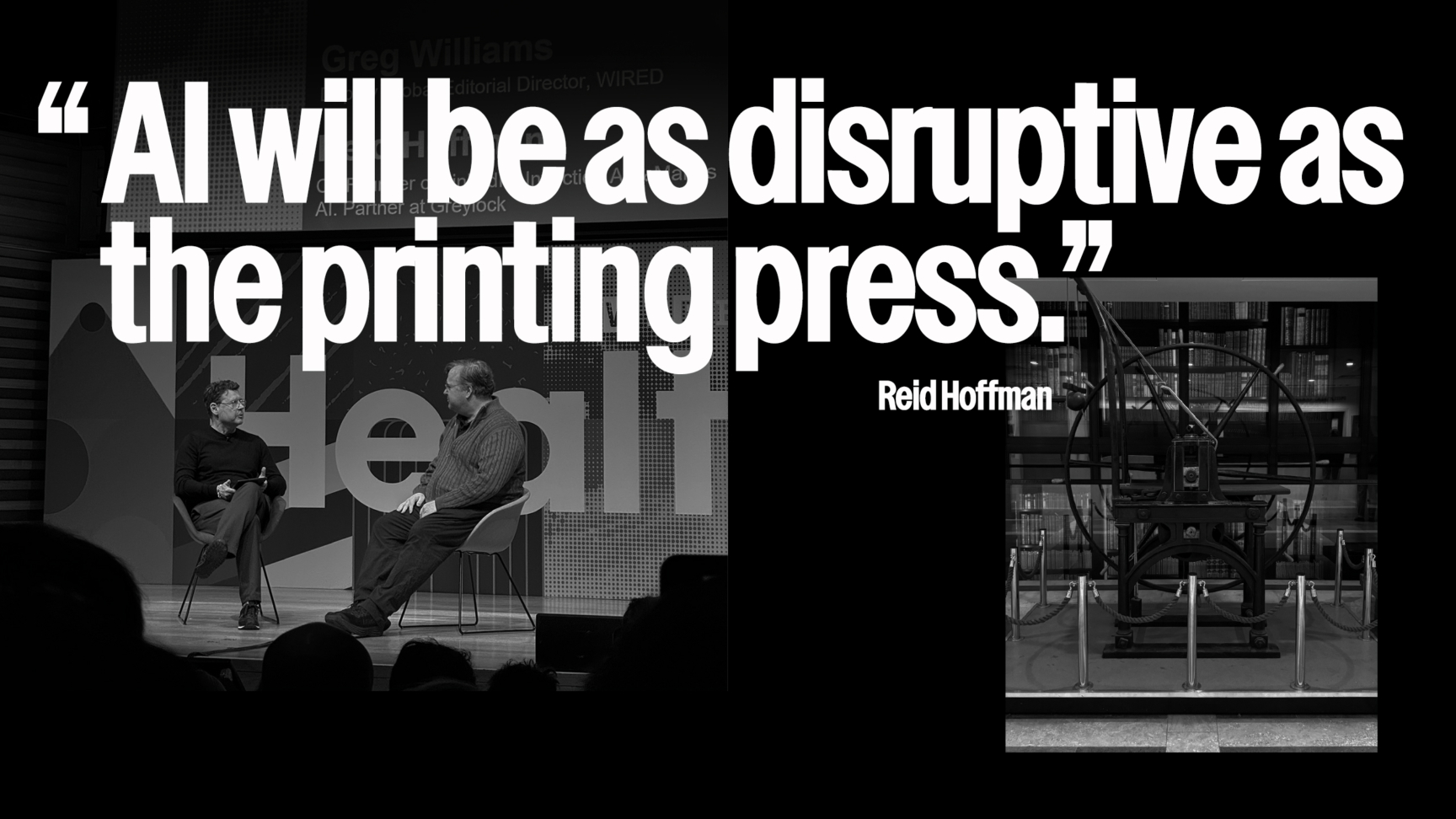
“AI will be as disruptive as the printing press.”
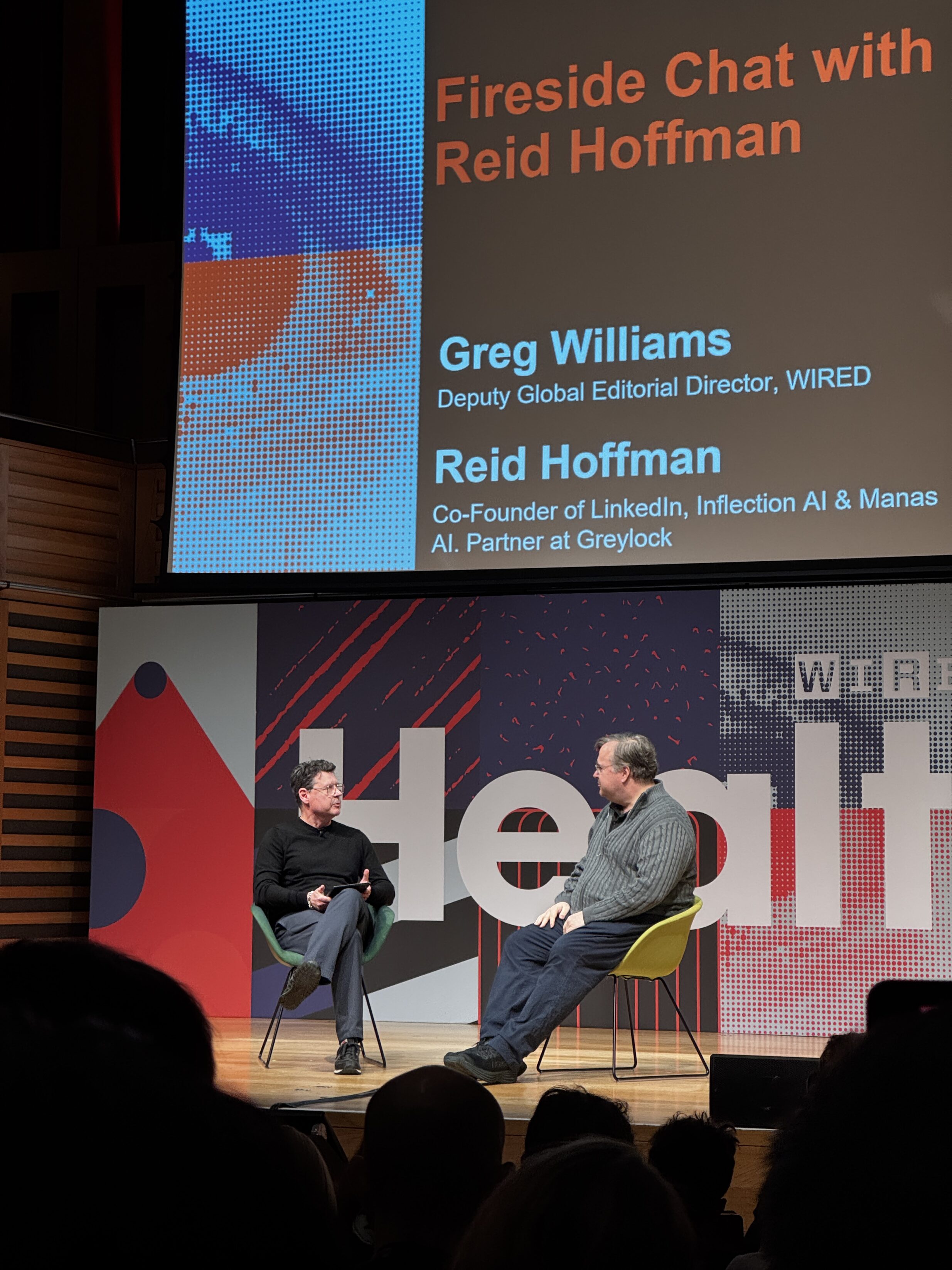
That was the statement that stopped me in my tracks at the WIRED Health Summit yesterday. Amongst a day filled with incredible talks, discussions, and debates, those words from Reid Hoffman lingered.
The printing press. Today, it’s easy to take for granted. From the original massive hand-turned machines we now have the office printer— more likely to be cursed for being jammed than hailed as revolutionary. But when the printing press was first introduced, it wasn’t just disruptive—it was divisive, controversial, and, in some cases, deadly.
Wars were fought over what it could produce.
For thousands of years, knowledge belonged to the elite—scribes, religious leaders, and the powerful. The printing press democratised information, making it possible for ordinary people to read, learn, and challenge the status quo. It enabled education and enlightenment, but it also paved the way for propaganda and misinformation. It was both a monster unleashed and a giant leap forward for humanity.
And now, AI stands at the same precipice.
The AI parallel
Like the printing press, AI is neither good nor bad—it’s what we make of it. It can create opportunities or amplify dangers. It can democratise power or centralise it. It can open new doors or close them forever.
The difference? This time, we have the learnings of history to lean on.
At UnitedUs, we choose to lean in with optimism, but with responsibility. We use AI every day, from workflow efficiencies to creative augmentation. But we do so with a strong moral and ethical foundation, ensuring that we use it to benefit the many, not just the few.
Ignoring AI isn’t an option. Shaping it is.
A walk through time
After the summit, as I left King’s Place, I wandered through the shiny new streets of King’s Cross, through the hub of St Pancras, crossed the road, and stepped through the red-brick doorway of the British Library.
Up a flight of stairs, past the great works of British literature encased in glass and light, I found one of the first printing presses ever built.
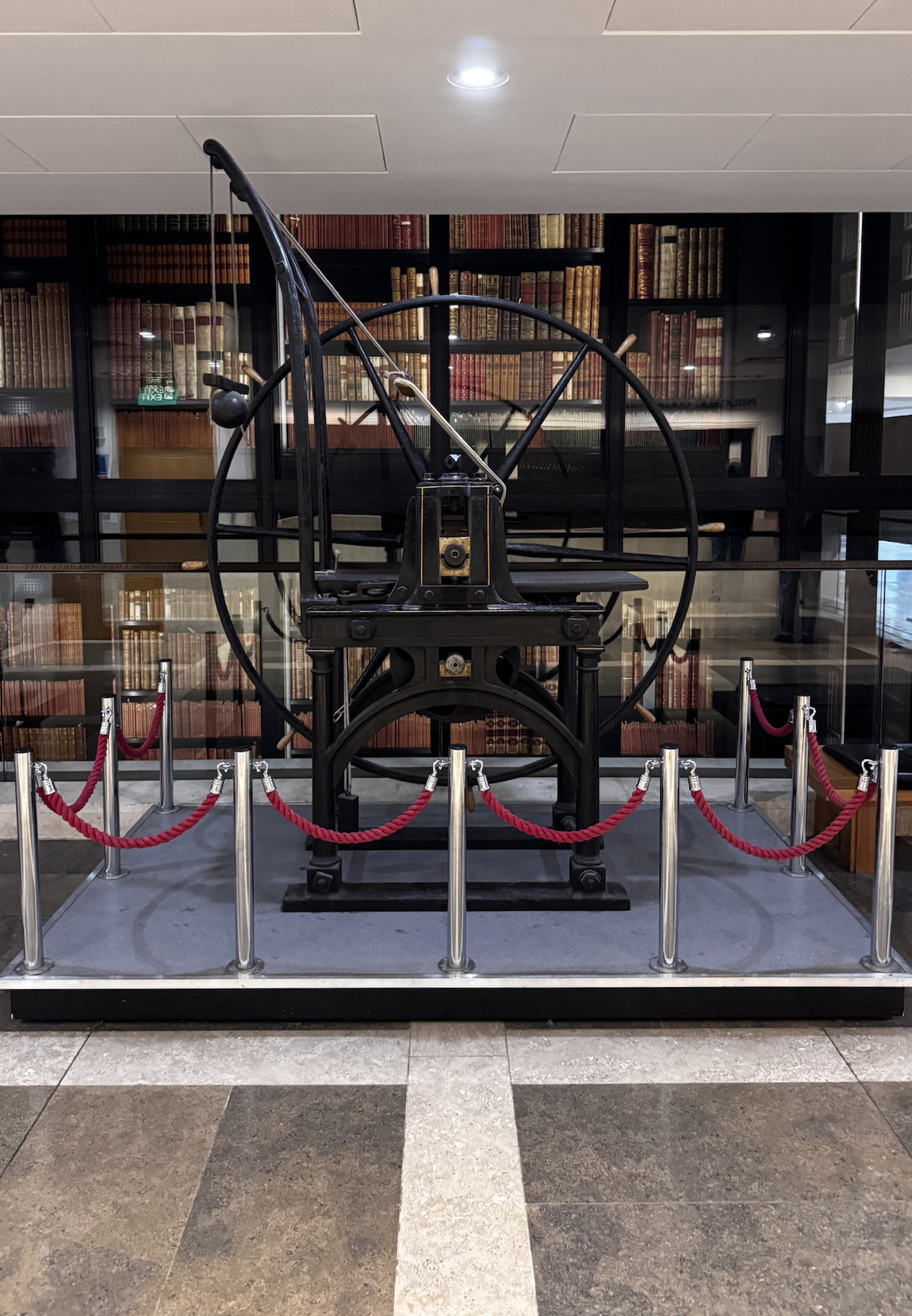
No grand display. No celebration of its impact. Just a forgotten relic standing next to a collection of stamps and the bathrooms.
The technology that once shook the world is now ignored as people rush past, tapping away at emails on devices that owe their very existence to it.
It made me wonder—in a few hundred years, how will people look back on these early conversations about AI?
Will they see it as a turning point for good? Or will they see the warnings ignored?
The answer isn’t up to AI. It’s up to us.
How do we want to shape the future?