How to use AI in brand
Brands now have the opportunity to incorporate AI-generated content across their communications. But as ideas can be rapidly visualised, are AI images actually worth it? With a focus on Midjourney, UnitedUs design director, Carl Rylatt, discusses how we put our learnings into practice... through an ultra-cheesy pizza brand.
15 September 2023
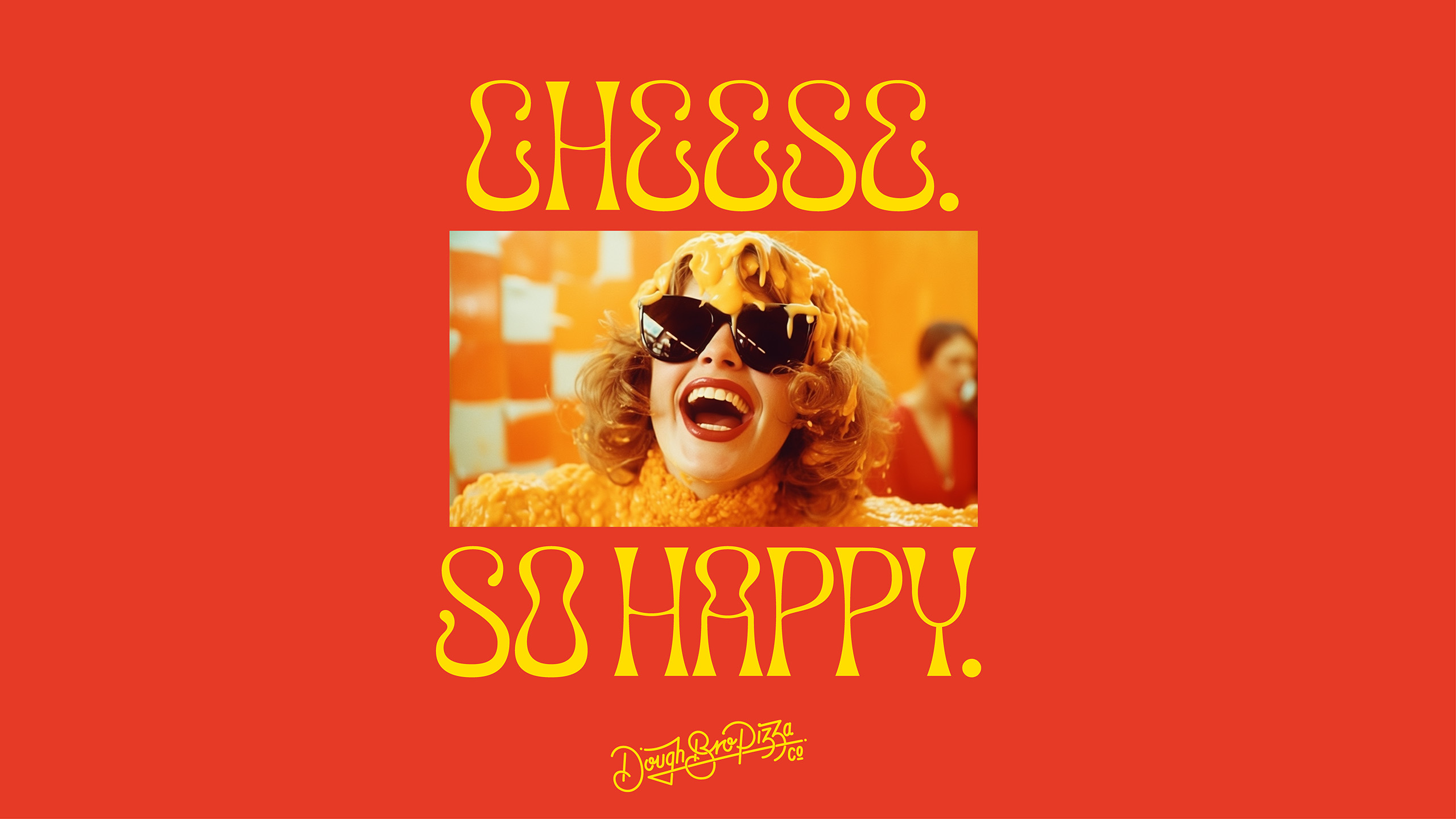
Brands now have the opportunity to incorporate AI-generated content in their communications. In doing so, ideas can be rapidly visualised in a way that transforms creative capabilities.
With a focus on Midjourney, and after using it for a while in the studio, its enormous potential became manifest. Whilst it is straightforward and super intuitive to make practically any image that might be knocking around in your head, as an agency, we have learned that it’s our ideas that matter. In particular, it’s the thematic exploration of those ideas that give the images AI creates real value. It is only with this approach that the potential in how we can successfully use AI imagery in our brand work can be realised.
The idea is still the ‘thing’ and always will be.
This article has been created following a Bacon & Waffle, an internal learning session in the UnitedUs studio, where we get together for breakfast (the bacon) and a member of our team leads a discussion about a project/subject in detail (the waffle). This time, our design director, Carl Rylatt, discusses how and when we can use AI-generated content for the brands we create.
An appetite for AI
With the advent of AI technology, there might be a tendency to use it as a crutch. AI is a tool, like any other that we can harness in the service of the IDEA. Midjourney cannot (as yet) come up with these for you, and we should be embracing the fact that our ideas have value and are the things that distinguish us from the machines.
Our job has never really been about simply making ‘cool stuff,’ although that is an obvious creative driver. We work in brand where strategy and design come together to make something that has purpose and meaning. Great graphic design not only has the aesthetic chops but also has the ability to follow themes, abstract concepts, express ideas through a range of media, and ultimately connect with our clients and their audience. If you don’t have an idea, you ain’t got nuffink, son.
Many moons ago, we did a small branding job for DoughBro Pizza Co. We created a lovely logo for them, as well as some colour schemes and typography guidance. Although we loved these tasty assets, they didn’t quite have the depth for a lovingly baked brand case study.

However, with Midjourney on the scene, a fresh idea can be realised quickly and with top-level results. Giving AI a slice of the action, we stretched the identity of mouth-watering Italian-American cuisine for DoughBro Pizza Co.
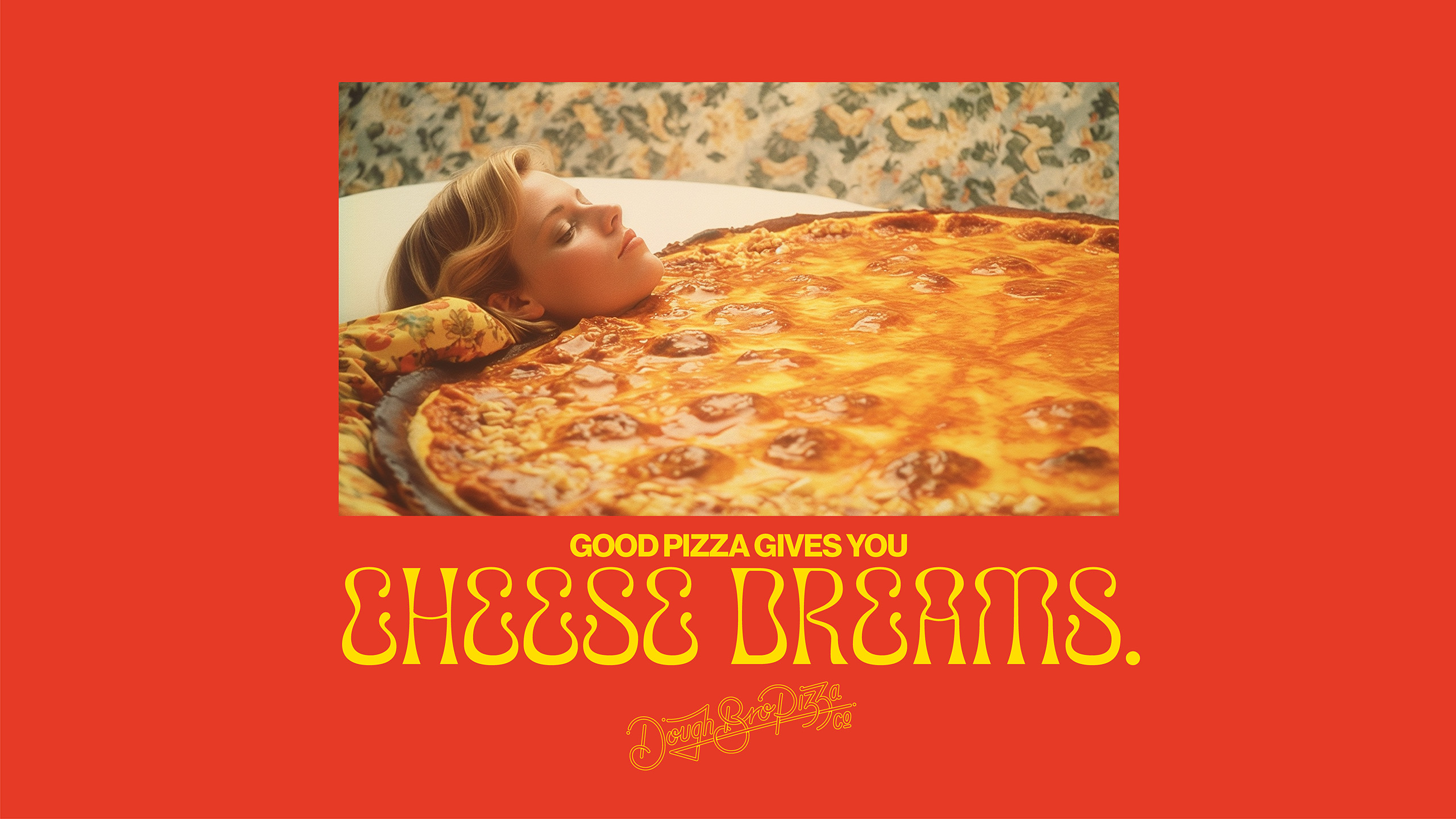

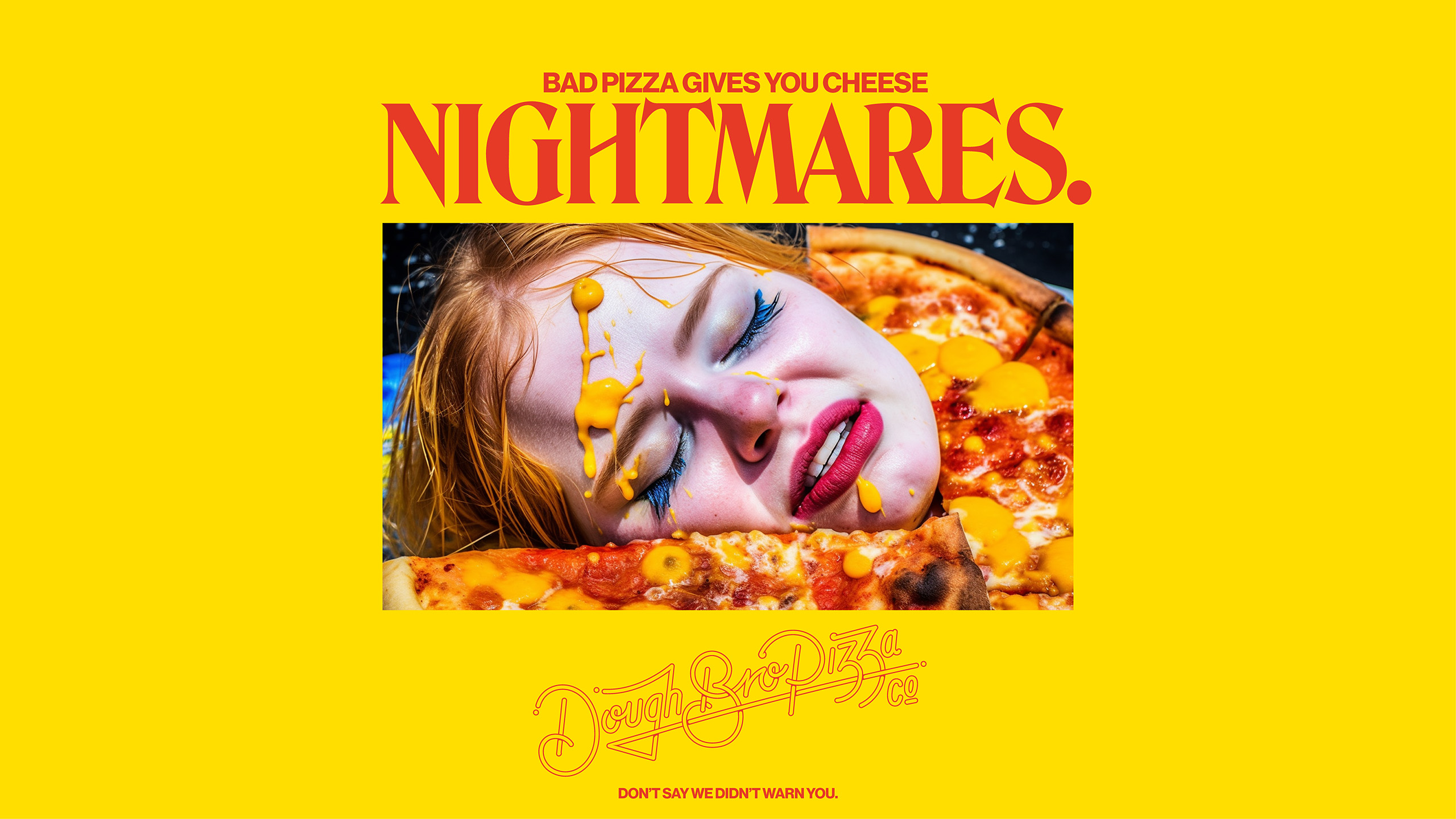
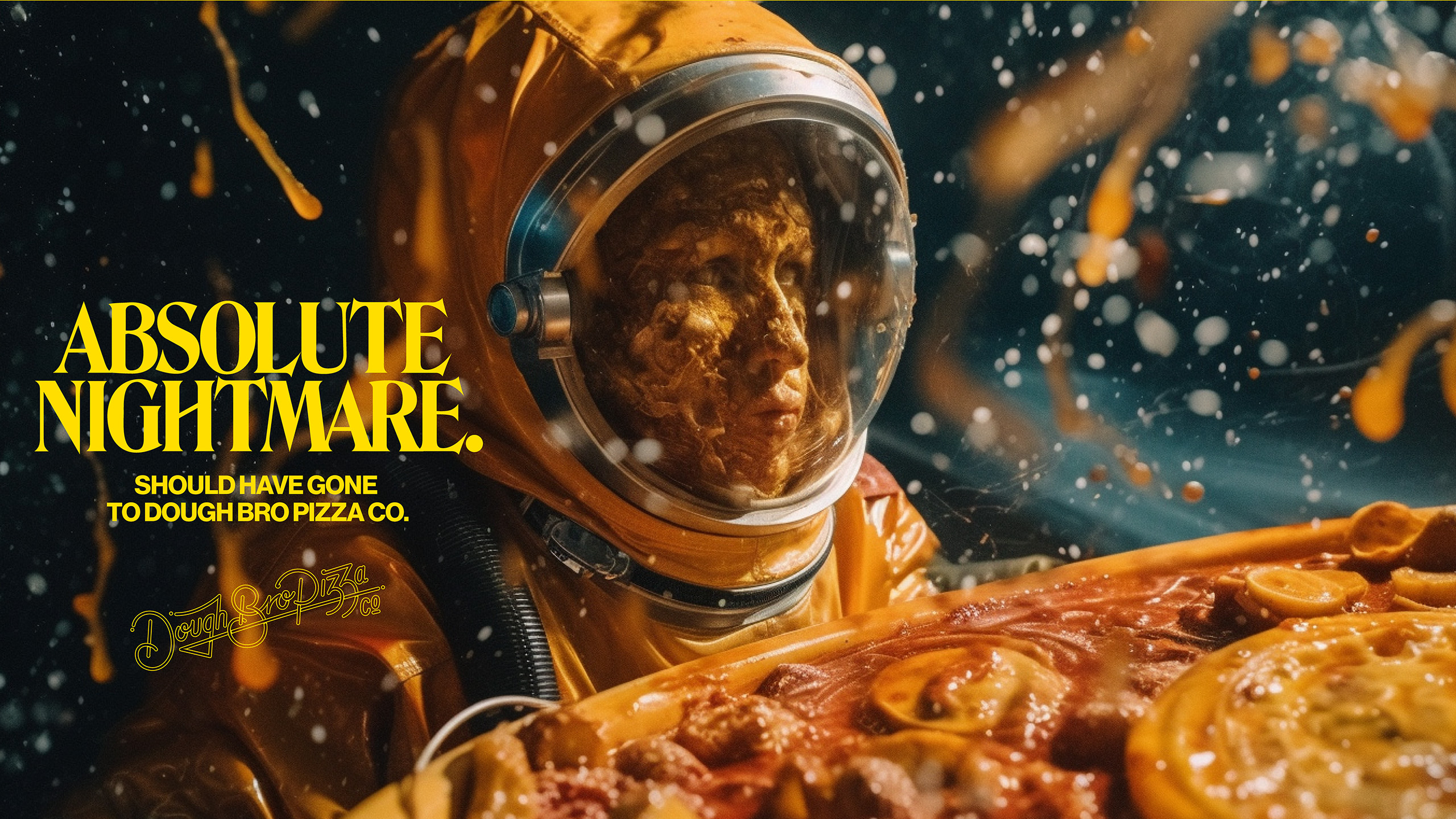
While visualising that good pizza – obvs the stuff that DoughBro Pizza Co makes — gives you cheese dreams, we utilised Midjourney to help us warn people of the perils of bad pizza. Enter cheese nightmares.
Maximising resources with Midjourney
In a couple of days of prompting Midjourney in the background, we were able to thematically explore our idea in a wide range of styles, but also with a certain level of coherence and quality that our budget would have simply not allowed. Having that thematic springboard to put Midjourney to use in service of a concept has elevated our imagery from being merely interesting to having meaning and purpose.
If we think about the cost involved in producing some of these images in the traditional manner, we would be looking at, for starters: studio hire, photographer commission, lighting engineer, costume department, art direction, model hire, make-up and rendering, not to mention, where do you get a freaking unicorn from? Essentially, thousands of pounds worth of photography and/or rendering that previously was only realistically the domain of super brands with astonishing budgets.
“Work fast, to the point of the work making itself and you are trying to catch it.”
John Warwicker – Tomato
One of the main advantages of creating your own images is the ability to freely explore the themes of your ideas without interruption. This allows for a certain spontaneity and freshness, as you are not constantly searching for relevant stock images. If an image does not work, it can easily be discarded and replaced without disrupting the creative flow.
With just a few days of invested time, we were able to produce a fully-fledged, eye-catching imaginary campaign for a small client with minimal resources. It includes high-quality, conceptually-driven, art-directed photography, collages, and even some animation. The campaign has a solid thematic backbone and would undoubtedly stand out in the market, positioning a small pizza delivery business above even the multi-million-pound chains. Our only limit was what we could imagine in the service of our client’s ideas.
Why use AI for image creation?
The question of whether we SHOULD do that is another thing entirely, and that will be for another time. The important takeaways here, though, are that:
- AI is a viable option that we can use to benefit ourselves and our clients our imagination is the only limit.
- The imagery we produce only has value if it is in service of our ideas, intent, and purpose.
- It’s really fun.
It’s clear AI has drastically improved the ability to visualise ideas at breakneck speed and at a lower cost, but these ideas first need REAL PEOPLE to think creatively, considerately and consciously. Some of our early Midjourney explorations produced some pretty weird outcomes, seemingly not making much sense to the AI-generator or us humans in the studio. Visualisations need refining with human sensibility.
If you’d like to explore the opportunities to communicate your brand, utilising the power of Midjourney and other AI tools, just get in touch with us.
Partner with us to create catalytic creative and confidence that delivers for your brand and business.
We don’t need a brief, just tell us the problem you need to solve, and we can talk it through.